Chinese Tea Culture: How to Choose a Tea Experience
Chinvent editorial image
Choose a Chinese tea experience focused on tasting, brewing or production, with practical questions about the host, participation, location and inclusions.
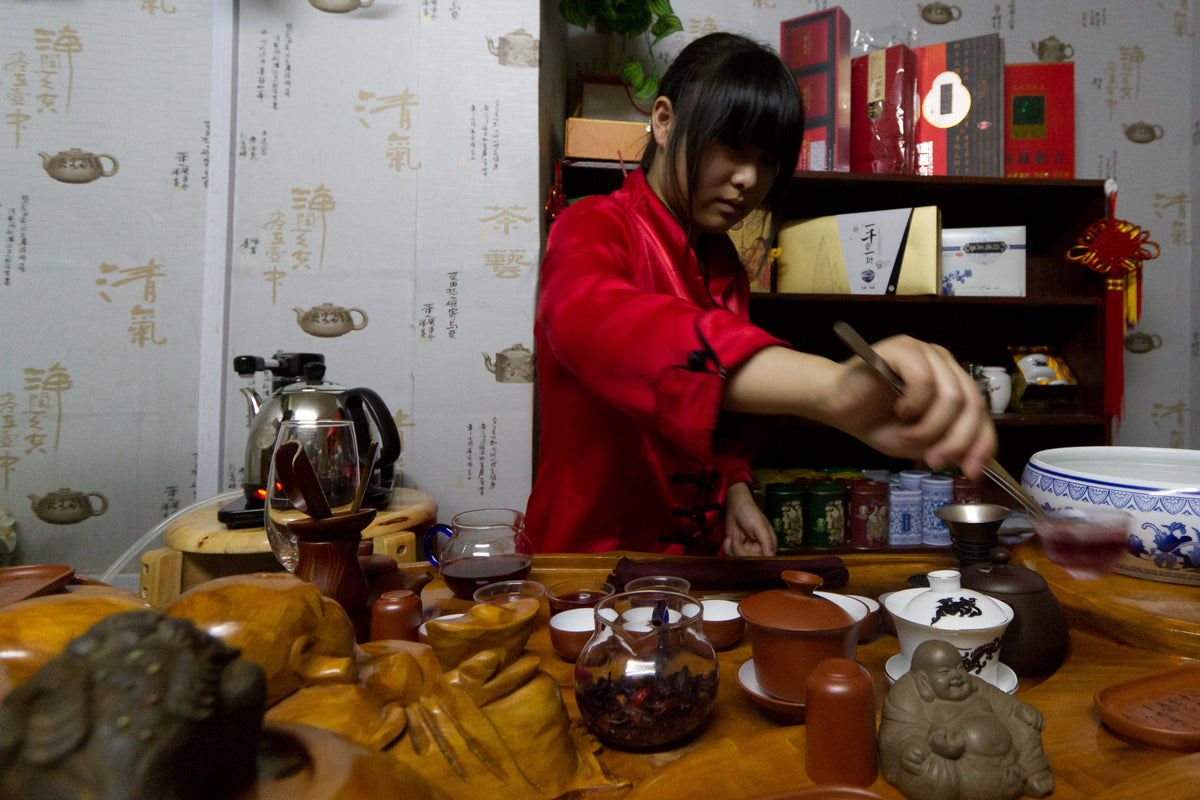
Cover photo: PierreSelim / Wikimedia Commons. CC BY 3.0. Original photograph

An enjoyable tea experience begins with knowing what you are curious about. You may want to taste unfamiliar teas, learn how a host prepares them or understand the work behind the leaves. Those interests overlap, but they do not require the same visit.
This guide helps international travelers choose an experience that offers the kind of participation they want. It treats Chinese tea culture as a living practice of making, drinking and sharing, with room for questions and conversation. It does not promise a particular ceremony, plantation activity or commercial course without confirmation from its provider.
Quick facts
- Choose a focus: Tasting, preparation, production or social conversation.
- Cultural context: UNESCO recognizes traditional tea processing and associated social practices in China.
- Before booking: Confirm the actual tea, venue, teaching language and format.
- Useful distinction: A teahouse visit is not automatically an instructional class.
- Takeaway: Learn a few things you can observe and try again at home.
Understand tea as a practice rather than a performance
UNESCO's tea heritage description includes cultivation, picking, processing, drinking and sharing. It describes tea as part of everyday life and social relationships, with knowledge passed through families and learning relationships. That scope is broader than a staged demonstration for visitors. [1]
You do not need to arrive with expert knowledge. A thoughtful first experience can begin with asking what tea is being served, how the leaves were processed and which choices the host makes during preparation.
Look for a visit that leaves room for those questions. A polished presentation may be enjoyable, but it should not replace your opportunity to understand the tea if learning is the reason you booked.
Choose between tasting, brewing and production

A tasting focuses on noticing differences. Ask how many teas will be compared and what the host will explain about them. A useful comparison has a purpose, such as a processing difference or a change in preparation, instead of presenting a long list without context.
A brewing session gives you a more active role. Ask whether you will handle the utensils, prepare an infusion and receive feedback. Watching a demonstration and practicing the steps yourself are different products.
A production visit concerns the work behind the tea. Confirm the actual site, the activity available during your dates and whether participation is permitted. A plantation photograph does not prove that picking or processing will be offered when you travel.
Let your interest guide the location
You can learn from a knowledgeable host in a city, at a workshop or in a tea-producing area. Choose the location according to the subject you want to explore and the amount of travel you can give it.
If a producer visit is the main goal, ask which stage of the process you will see. Timing matters when a visit depends on a seasonal activity. Confirm what will happen if that stage is not taking place during your stay.
If tea is one part of a broader city trip, a well-defined tasting or preparation session may be more practical than a long excursion. Compare the total time, including transport, rather than assuming a rural venue is always the more meaningful choice.
Ask what the host will actually teach
Begin with three questions: Which tea will we use? What will I be able to do? How will the explanation be given? These establish the content, participation and language of the visit.
Ask whether the session is intended for beginners. If you already brew tea, explain what you want to learn next. A host can respond more usefully to a specific interest than to a request for “the full history of tea.”
Avoid making an impressive title or a certification claim the only reason for choosing a teacher. Ask for the program's actual content and any qualifications relevant to what it promises. A short visitor session need not claim professional certification to be worthwhile.
A real provider example to investigate
Chilli Cool China's public booking page lists a Chengdu gongfu tea course alongside its other cultural offerings. Use that named offer as a starting point for asking about the tea used, current location, teaching language and participation. The listing does not confirm availability for your individual dates. [2]
The point of an example is to make the research concrete. Compare any provider using the same criteria: actual program, host, venue, group size, duration and inclusions.
Ask whether the session includes a sales presentation or product purchases. Buying tea can be a welcome part of the visit if you want it, but it should not be confused with the instruction you expected to receive.
Learn by observing one change at a time
During a session, ask the host to explain the choices being made. What changes when a different quantity of leaves is used? Why choose that vessel? What should you notice between infusions?
Keep the exercise manageable. Comparing one variable at a time makes it easier to understand what you are tasting. Write down the preparation that produced a result you enjoyed, using the host's terms and measurements.
There is no need to describe a flavor in elaborate language. Start with differences you can actually notice and ask the host to clarify them. An experience should help you become more attentive, not make you feel that you must imitate an expert's vocabulary.
Participate respectfully without memorizing a universal script
Follow the host's instructions for handling hot water and utensils. Wait when a step needs explanation, and ask before moving something arranged for the session. If a custom interests you, ask what it means in that setting.
Tea practices vary with the people and context. Do not treat one demonstration as the rule for every home, teahouse or region. A host's personal explanation is often more useful than a list of supposedly mandatory gestures.
Ask permission before recording the session or photographing others. If you want to make a video, agree on that beforehand so that filming does not interrupt the preparation or conversation.
Check inclusions and spending expectations
Ask whether the price covers tea, instruction, utensils, refreshments and any transport. Clarify how much time is for learning and how much is for a tour, shopping or another activity.
If you want to buy tea, request clear product information, quantity, price and any preparation advice. Keep the purchase separate from a judgment about the whole experience. A good conversation does not oblige you to buy a large amount.
For items you intend to take home, check the rules that apply to your destination and the actual goods. Do not assume that every food or plant-related item can enter another country because it was sold to a visitor.
Turn the visit into something you can use afterward
Ask for the names of the teas you tasted in Chinese and English where available. Record the type, producer information supplied and the preparation you want to repeat. Keep that note more specific than “the tea I liked on the trip.”
If you used a particular utensil, ask what role it played and whether you need it to repeat the exercise. Start with a manageable setup rather than buying every object on the table.
A useful first experience can leave you with a clearer interest: more tasting, more brewing practice or a later producer visit. That is a better outcome than believing a short session has taught you everything about Chinese tea.
Frequently asked questions
Is a tea tasting the same as a brewing class?
No. A tasting may be mainly comparative drinking and explanation. A brewing class should state which steps participants practice and how instruction is provided.
Do I need to visit a plantation?
Only if that setting matches your interest. A city session can be useful for tasting or preparation, while a producer visit needs confirmation of the activity available during your dates.
Does UNESCO status certify a particular teacher?
The listing concerns a cultural practice, not endorsement of a commercial provider. Choose a course by its actual content and confirmed arrangements. [1]
Should I know tea etiquette before attending?
Follow the host's guidance and ask considerate questions. Do not assume a single set of gestures applies to every setting or community.
How much tea should I buy after a session?
Buy only what you want and can identify clearly. Ask for product and price information and consider destination rules before taking goods home. A session does not create an obligation to purchase.
Discuss a tea-focused cultural visit
Tell CHINVENT whether you want tasting, brewing practice or a production visit, along with your dates and preferred city. Include your teaching-language needs and how much travel time you want to give the experience.
Contact CHINVENT about your cultural visit. Confirm any proposed provider, format and terms before booking.
Sources and review date
Public materials reviewed October 14, 2026. UNESCO provides cultural context; the provider listing is self-published. Comparisons and participation questions are CHINVENT editorial guidance. Current availability and prices require direct confirmation.
Need a Custom Itinerary?
Build a route around your dates, interests and travel style.
Plan Your Trip →